Epilepsy is one of the most misunderstood and isolating conditions, and living with it can make difficult times even harder to navigate. People with epilepsy are at greater risk of experiencing mental health difficulties, including stress, anxiety and depression. Epilepsy can also affect confidence and self-esteem, which can have a significant impact on mental wellbeing.
Can you tell us more about Epilepsy Action and Young Epilepsy, how they differ, and why you've come together to launch the 'PURPLE' keyword?
Epilepsy Action and Young Epilepsy are complementary organisations with a shared goal: Improving the lives of people affected by epilepsy.
Epilepsy Action supports adults and families affected by epilepsy by providing accessible information, advice and support, and by campaigning for improved services and greater awareness of epilepsy. Young Epilepsy provides similar support specifically for children and young people. Mental health challenges are common within the epilepsy community, with people with epilepsy experiencing a two to five times higher risk of developing a mental health condition. These challenges are particularly associated with anxiety, stress, loneliness and feeling overwhelmed.
To address this, for the past three years Young Epilepsy has partnered with Shout to help make free, confidential mental health support easier to access for the epilepsy community. We are now pleased to welcome Epilepsy Action onboard. By combining our reach and expertise, we can raise awareness of the support available and help more people get the help they need, when they need it most.
This partnership reflects our shared belief that no one should have to face the emotional challenges of epilepsy alone.
Have you seen differences in the mental health challenges and support needs of children and young people with epilepsy compared to adults?
Anyone with epilepsy can experience mental health challenges, but the pressures can look different across life stages.
More than three-quarters (77%) of young people said that living with epilepsy had a significant impact on their mental wellbeing, including their thoughts, feelings and ability to cope with everyday life. For children and young people, epilepsy can affect confidence, friendships, school life, independence and identity at a time when they are still developing their sense of self. In particular, anxiety about having seizures in public, feeling different from peers, restrictions on activities and concerns about the future can all have a big impact.
Adults may also experience anxiety, depression, isolation and loss of confidence. Nearly nine in ten (87%) people with epilepsy have experienced these feelings, alongside additional pressures such as employment, driving, relationships, parenting, caring responsibilities and managing long-term healthcare. Public perceptions of epilepsy can contribute to this sense of isolation. More than three-quarters (77%) of people believe that someone with epilepsy poses a risk to themselves or others, while nearly two in five (39%) think people with epilepsy cannot handle work or responsibilities.
From what we’ve both seen among our own service users, there has been an increase in people experiencing mental health difficulties, partly due to pressures on NHS provision.
How do you think the partnership with Shout will help you reach new or previously overlooked groups of people with epilepsy?
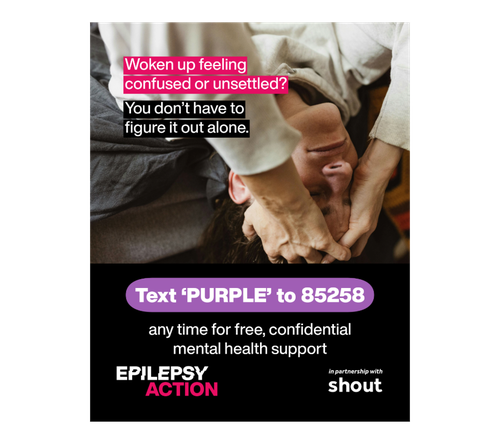
The partnership will provide an additional route for people who may not have felt ready or able to access more traditional forms of support. An anonymous, text-based service can feel more private, immediate and less daunting, helping to reach people who are unsure whether their concerns are ‘serious enough’ or who are worried about being judged, compared with speaking to someone on the phone, attending a support group or going to a one-to-one appointment. It’s also available 24/7, which is important because moments of distress are not limited to office hours.
“[The volunteer was] very receptive and kind, made it very easy to open up about current issues.”
- 'PURPLE' texter feedback
We both also receive practical marketing support from Shout, making it easier to signpost the service through our social media and day-to-day work and helping us reach as many people as possible who may benefit from it.
What was the process of working with Shout like to ensure volunteer responders understood epilepsy, its impact on mental health and the epilepsy-specific support available?
We both were able to share epilepsy-specific information and language to ensure that volunteer responders have a strong understanding of epilepsy and its wider impact. For example, we helped volunteers recognise that epilepsy is not just about seizures. It can also affect confidence, independence, education, work, social and family life, and mental wellbeing. We were keen to ensure responders understood common concerns that people living with epilepsy may raise, including fear of having a seizure, feelings of shame and stigma, loneliness and safety.
We also helped identify appropriate epilepsy-specific support, including links to our websites and services, so texters could be signposted to further help beyond the immediate conversation when needed.
What has kept Young Epilepsy committed to the partnership with Shout over the past three years, and what led Epilepsy Action to join the partnership?
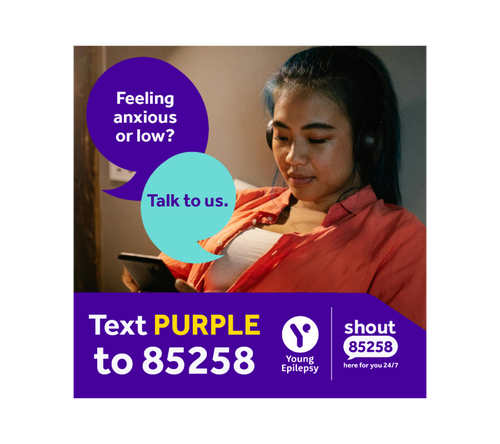
Young Epilepsy’s long-term partnership with Shout reflects how well the service complements our existing epilepsy-specific support, offering immediate, confidential mental health support at any time of day or night. Epilepsy can have a profound emotional impact, and people affected by the condition need different ways to access support when they are struggling.
Epilepsy Action has decided to join the partnership because, through our wider services, we’ve seen that mental health is a significant part of living with epilepsy and should be considered as part of the information, advice and practical support we provide. This has been further reinforced by the increasing number of people using our services who are also experiencing mental health difficulties.
What is the main impact you’ve seen from the partnership so far at Young Epilepsy, and what do you both hope to see in the future?
The biggest impact seen so far for Young Epilepsy has been providing a dedicated, accessible and safe space for young people affected by epilepsy and their families to open up and receive immediate mental health support. ‘PURPLE’ is a dedicated keyword on the Shout platform for Young Epilepsy and now Epilepsy Action, signalling to responders that epilepsy is part of the context for someone’s distress when they reach out for emotional support.
We’re both particularly interested in exploring real-time insights from anonymised Shout conversations using the ‘PURPLE’ keyword. We hope these insights will strengthen our understanding of the emotional issues experienced by people living with epilepsy over time and support our ongoing commitment to ensuring mental health is considered across our epilepsy support, awareness, influencing and service departments.