The MHI Journey
A timeline of how Mental Health Innovations has grown through partnership, innovation and insight to transform digital mental health support.
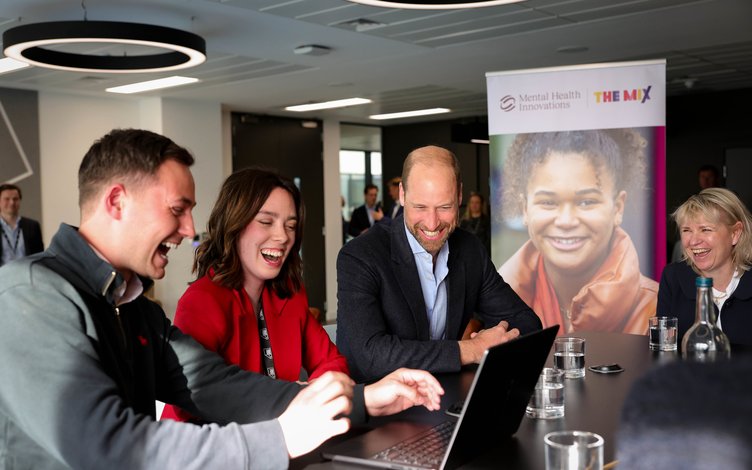
2015 - The History of The Mix
Rebranded from Get Connected and YouthNet, bringing together helpline and digital support services for under 25s in the UK.
The Mix built on the youth voice focus in 2021 by establishing the Youth Voice Network - reinforcing that young people want to volunteer, offer peer support, and develop skills within a power-sharing environment.
This also reflects a shared theme across our histories: recognising the value of partnership to expand services and strengthen support and continuously improve - a theme that continues in our journey.

2016 - Heads Together
"A campaign to tackle stigma and change the conversation on mental health.”
Through Heads Together, their Royal Highnesses, the Prince and Princess of Wales, built on the great work happening around the country, to ensure that people feel comfortable with their every day mental well-being feel able to support their friends and family through difficult times, and that stigma now longer prevents people getting the help they need. The campaign helped to spark a national conversation on mental health.
This moment revealed a growing gap between demand and available support - and highlighted the potential for digital services to play a role.
2017 - Building something new
With support from The Royal Foundation, Mental Health Innovations was created to be the charity to begin developing new, innovative digital services, with data at its core.
These services would work alongside the other third sector mental health support services reaching the increasing demand across the UK.
2018 - Piloting Shout
MHI pilots Shout in partnership with The Mix, reinforcing a core theme of working collaboratively across the sector.
Not only did we learn that we can deliver effective digital mental health support, we also discovered that there was clear demand and services needed to be 24/7 - leading to expansion of our team in New Zealand.
This marked a shift in how digital support was viewed, helping change the conversation around what’s possible.
2019 - Shout launches publicly
Within our first year, we saw a strong demand from people wanting to volunteer, highlighting a clear appetite to support others in moments of crisis.
While mainstream media helped raise awareness, it wasn’t enough on its own to sustain engagement with the service.
Keyword collaborations proved critical in reaching people at the right moment, reinforcing the importance of working closely with partners across the system.
2020 - Shout scaled rapidly to meet the surge in demand.
With the pandemic hitting the UK in 2020, MHI had to work to rapid scale capacity within the Shout service to meet the surging demand, supporting up to 1200 conversations a day.
Our digital services remained accessible and uninterrupted during a time of national disruption. We scaled the service rapidly to meet soaring demand, often without sustained government funding - highlighting the need for continued investment in digital mental health support.
As mental health rose sharply on the national agenda, our data provided real-time insights to organisations including the Department of Health and Social Care.
2021 - Shout launches within the NHS
We introduced our first NHS ICB keyword partnership, showing the impact Shout can have when integrating with statutory services and expanded access through Google OneBox.
Partnerships were critical in helping us reach more people and communities and responding to demand efficiently at scale. Funding became more challenging, leading to the launch of MHI public fundraising programme including challenge events and giving campaigns.

2022 - MHI Data Insights expands
Demand remained high, shaped by the lasting impact of the pandemic and the cost of living crisis, which also created funding challenges.
We paused wider promotion, expanded our Data Insights team with support from the Jensen and Lori Huang Foundation, and developed the Shout Conversation Simulator using early generative AI.
2023 - Expanding Impact in new populations
We launched a prisons service with Serco and expanded Google OneBox to eating disorders.
We helped shape the National Suicide Prevention Strategy - including the ambition for a national 24/7 crisis text line - supported by our data, simulator and work with at-risk groups. This was reinforced through Urgent and Emergency Care funding and support from the Suicide Prevention Fund.

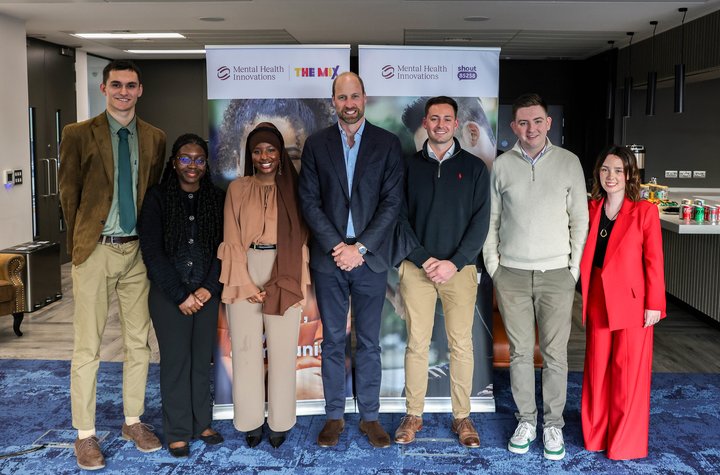
2024 - MHI merges with The Mix
We merged with The Mix, strengthening our combined impact.
Funders responded positively to a more collaborative, integrated model - recognising the value of bringing services together.
We introduced a clinical model for Shout, continuing to learn and innovate in line with NHS England requirements, and began rolling out the service across Integrated Care Boards.
Read about our partnership with Birmingham and Solihull Mental Health NHS Foundation Trust here.
2025 - Building for the future
We expanded corporate partnerships, launched LifeSkills and a new Mix website.
Our Data Insights team received an RSS award, and we built PeerChat ahead of its 2026 launch.
2026 - Looking ahead
We launched PeerChat and built a Wellcome Trust-funded Data and Evidence Network of mental health charities.
AI is beginning to reshape how people find and access support, creating new opportunities and challenges for digital mental health services - including in our own work at MHI.
Young people continue to value peer-to-peer support, highlighting the importance of connection and shared experience.