We use necessary cookies that allow our site to work. We also set optional cookies that help us improve our website. For more information about the types of cookies we use, visit our Cookies policy.

Cookie settings
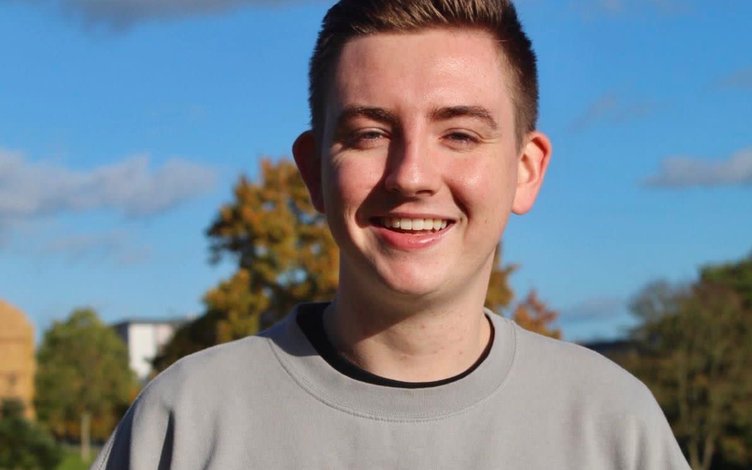
Michael Lister.jpeg

Michael Lister began getting involved with youth participation 5 years ago, with the idea that he could try to shape the services he received support from. Having grown up in the care system, where many decisions were made for him, it was especially meaningful.

After chairing MHI's Youth Board for five years, he now helps steer the charity from its Board of Trustees. For Trustees’ Week, he talks about why young decision-makers are essential to getting services right, and how with his help, MHI built a route from youth engagement to equal governance.

What do you do as a trustee for MHI?

Essentially, a Trustee is someone who is part of a Board responsible for making sure a charity is well-run, financially sustainable and, most importantly, that we are delivering our mission, and this is what I do for MHI. That means we help look at the bigger picture, from MHI’s strategy and finances to safeguarding and the charity's governance. My favourite part is when we explore our life-saving services and the long-term goals and plans for our services, like The Mix and Shout.

A big part of being a trustee is asking questions- lots of questions. We are there to be a critical friend, someone who can challenge decisions, but most importantly, we are there to support the people leading and running the charity. We are not there to run MHI day-to-day, but we do have a responsibility to ensure the decisions being made are right for the people we support and who use our services.

Like all trustees, we all bring a different perspective to the table. I have spent years working in youth participation and voice; I’m a social worker with my own lived experience of growing up in the care system. All of these experiences shape the questions that I ask and the things that I notice. It's very easy for trustees to be caught up in reports, numbers, and organisational priorities, but ultimately we always need to remember why we are at that table and that we are making decisions that affect real people’s lives.

Why is it important that a charity like MHI (and The Mix and Shout) has young trustees?

I think it's quite simple, really. I find it quite extraordinary that we still have to make the case for young people being involved in decisions about services that exist for them.

We live in a society where “adults” (although the world is calling for the term “young people” to be used for those until the age of 30), professionals, and politicians make enormous decisions about young people’s lives, often with very little meaningful involvement from the young people themselves. And then we wonder why the services do not always work for them. For years, charities and other organisations have spoken about the importance of listening to young people, and that’s absolutely right. But we all know we need to go further than listening! There is a massive difference between asking young people what they think and actually sharing decision-making power with them.

Young trustees bring different life experiences; we grew up in a time/world that is very different from that of the average-aged person on a Board of Trustees. We grew up with technology at our fingertips, friendship dramas the older generations would never have thought we would have, grew up during global pandemics and worldwide disasters, and so much more. We bring all these perspectives and ways of thinking that we have developed during that time. We might question something that has been done the same way time and time again, or notice something that other people have not considered. That does not mean that if you have a young trustee on your board, then you have all the answers, but it does mean that our perspectives have a place in the room.

At MHI, our Board values having young trustees. We are not asked to comment on the “young people’s issues” while everyone else is making decisions about finances, strategy or governance. We are always treated the same, as equals, around our Board, recognising that we have the same legal responsibilities as every other trustee and the same influence as well.

I think that is especially important in Mental Health. The world young people are growing up in is changing all the time, and the services designed to support them need to change with us.

"We are always treated the same, as equals, around our Board, recognising that we have the same legal responsibilities as every other trustee and the same influence as well"

Michael

How did you get into becoming a trustee?

My journey started with one of MHI’s services, The Mix, which before the merger was its own charity. Around five years ago, I got involved in youth participation. I was drawn to the idea that young people could help shape the services that supported them, rather than simply receiving them.

At the time, there wasn’t the Youth Board we know today, and there was an opportunity to help create something from the ground up. I went on to Chair the Board for five years, working alongside some incredible, brilliant young people and colleagues to develop it and make sure that youth voice is a more meaningful part of the organisations. It wasn’t something that happened overnight. We spent years learning, developing relationships, figuring out what worked and, at times, challenging the organisations to think differently about how they involved young people.

Over those five years, I grew up quite a lot myself. My confidence developed, my understanding of leadership changed, and I started to see and understand how charities operated and how decisions were made. As The Mix and MHI came together, my role also created opportunities to further contribute to the Board of Trustees. Becoming a Trustee was a significant moment for me. I went from helping build a space where young people could influence decisions to having formal responsibility for some of those decisions myself. I don’t think I ever imagined, when I first got involved, that I would end up sitting on the Board of a national mental health charity. But looking back, it’s a journey that has shaped so much of who I am today.

What have been some of your proud moments as a trustee?

My answer will always be the progress that MHI has made over the years, but more specifically, seeing how far the Youth Board has come! When I look back to where we started and think about the role young people have gone on to play in conversations about strategy, safeguarding, services, and the future of the organisation, it’s quite special.

I’m proud that we’ve been able to help create something that is bigger than any one person. The Youth Advisory Board was never meant to be about me, or any individual young person. It was about creating a space where young people’s experiences and perspectives could genuinely make a difference, and where the next generation of young leaders could come through. We didn’t create a place for young people to just come and share their stories; we created a Board where young people could develop leadership and confidence and influence a national charity.

Being involved as The Mix and MHI came together was another significant moment. Organisational change brings difficult decisions, and I felt a real responsibility to make sure that the importance of young people’s voices wasn’t lost in those conversations. But I think there’s also something quite personal about it all.

But I think the most meaningful part of this journey is quite personal. I grew up in the care system, where decisions about your life are often made in meetings you are not a part of, by people who might know your case better than they know you. I know what it feels like to have your experiences discussed, your future planned, and your wishes recorded (Do not get me started on the Three Houses!!! (IYKYK)), without always feeling that you have much power over what happens next. And I think that’s something we need to be more willing to challenge as a society, as we have done so within MHI!

We have systems that talk constantly about putting children and young people at the centre, but that doesn’t really reflect how decisions are still being made. We need to be prepared to reflect on and acknowledge this, rather than assuming that a consultation process automatically means we have listened. To go from being a young person who experienced those power imbalances to becoming someone who can influence decisions at the highest level of a national charity is incredibly meaningful to me.

But… what makes me proudest is knowing the work we have done has helped create opportunities for other young people to have that influence too.

"I grew up in the care system, where decisions about your life are often made in meetings you are not a part of, by people who might know your case better than they know you. I know what it feels like to have your experiences discussed, your future planned, and your wishes recorded without always feeling that you have much power over what happens next"

Michael

How has being a trustee helped you in other parts of your life?

Being a trustee has probably taught me as much about myself as it has about running a charity.

I can recall my first time being in a board meeting, little 17-year-old Michael sitting at home on Teams. I felt so intimidated. Sitting virtually alongside people with decades of professional experience, with very impressive careers running and leading organisations and businesses I grew up dreaming of once being able to afford to buy an item from. It was so easy to question what I could possibly add to the conversations they were having.

But I have now learnt that my experience and expertise, and everyone else's, come in different forms. My own lived experience, my work with young people, and my professional experience as a social worker all give me perspectives that others might not have. Equally, I have learnt an enormous amount from the people around me. Trusteeship has definitely made me more comfortable in challenging authority.

Just because someone is more senior, has more experience, or holds a particular title does not automatically mean that they are always right. That does not also mean that we need to be confrontational, but it does mean being confident in asking questions and standing up for your own professional judgement.

This has been very helpful in my work as a social worker. Children’s social care is a system that is full of processes, procedures, and competing demands. Those things have their place, but I think there is always a danger that we become so focused on the system that we lose sight of the children and families living within it. Being a trustee has taught me to look beyond individual decisions and think about the wider structures, cultures, and policies that are shaping people’s experiences. It has also taught me that leadership isn’t reserved for people with a particular background or career path. Sometimes the people who have experienced systems at their most difficult are the very people who have the most to contribute to changing them.

How has having you as a trustee helped MHI?

I think that’s probably a question for the other trustees, staff, and our beneficiaries to answer!

But ultimately, I hope I have brought a different voice and perspective to the conversations we have within MHI. I have used our amazing services myself during some very difficult times. I have met other people who have used our services for many years and have heard their incredible stories and the challenges they faced along the way. I have spent years advocating for young people’s voices to be taken seriously. I think that helps me ask questions about how we involve people, whether we’re listening to what they’re telling us and, crucially, what we’re actually doing with that information.

My professional background, hopefully, brings another perspective to MHI, particularly around safeguarding, vulnerability, relationships, and, importantly, the view we all share at MHI: seeing people as individuals rather than just service users or statistics.

Personally, I am someone who is not afraid to challenge things. I think that is an important part of being a trustee, as well as a responsible professional and person in the world. It is something I am very privileged to be able to do. In a position where I can challenge, I frequently ensure I think about those who might not have the power to do so, whether this is caused by systemic failures or barriers we, as a country, have not yet overcome. We frequently think about how our services are reaching people and how we can hear their voices more, but we also think a lot about whose voices we are not hearing at the moment and who cannot access our life-saving services. What do we need to challenge to be better and solve this?

To be honest, what I hope my being a trustee has really brought to MHI is helping to keep those conversations alive and contributing to a culture where people’s perspectives, whether staff or our service users, are taken seriously, even when they challenge how we think or work.

Is there anything you would say to another young person who is thinking about getting more involved with MHI or another charity in this way?

Go for it! Even if you are not entirely sure about what you are doing at first, or have no clue where it might lead, there is nothing wrong with putting yourself out there.

At times, I think we make leadership sound like something reserved for a particular type of person. Someone who is confident, articulate, professionally successful and knows everything! And let me not pretend there aren’t still plenty of leadership positions that feel completely out of reach for some people; there are still some real barriers around class, age, race, background, and simply knowing the right people. We still have a long way to go in making leadership accessible.

I certainly didn’t start out knowing how a charity Board worked, what good governance looked like or how to read financial reports. Those are things I’ve learnt along the way, with the support of people who were willing to give me opportunities. You do not need to have a degree in governance, years of leadership experience or a perfectly polished (definitely not made by ChatGPT) CV to make a difference.

The most important message for other young people, is that you do not need to know everything before you put yourself forward.

I really encourage you all to get involved wherever you can, whether that means volunteering for a charity, contributing to its youth voice work, supporting a campaign, or applying for a trustee position! Find something you care about, whether it’s mental health, the environment, children and young people, or historical estates. Ask questions, build relationships, and, if you can, attend an event or send a quick email explaining why you care about their work and mission. Don’t be afraid to put yourself forward for opportunities, even if they feel a little out of reach at first. At least give it a try!

"Find something you care about, whether it’s mental health, the environment, children and young people, or historical estates. Ask questions, build relationships, and, if you can, attend an event or send a quick email explaining why you care about their work and mission. Don’t be afraid to put yourself forward for opportunities, even if they feel a little out of reach at first"

Michael